
- Medical treatment for hair fall – Finasteride and Minoxidil are the mainstays of medical treatment for androgenic alopecia, though other supplements such as biotin and other vitamins and trace elements may be of use in certian deficiency states.
- PRP Therapy
- Very commonly used in all hair treatments, but it has proven value only in having regenerative effects in arthritis. Platelets are small, flat cells found in the blood which are important in blood clotting. These cells are believed to be secreting 30 odd growth factors when activated and these growth may help rejuvinating the dying hair follicles. For this therapy, a blood sample is taken from the patient himself and is processed in a centrifuge to derive a platelet concentrate (PRP) which is then activated and inserted in the patients scalp through very fine needles under topical or local anesthesia which makes it a painless procedure. However, this procedure may not be effective for a completely bald area over the scalp.
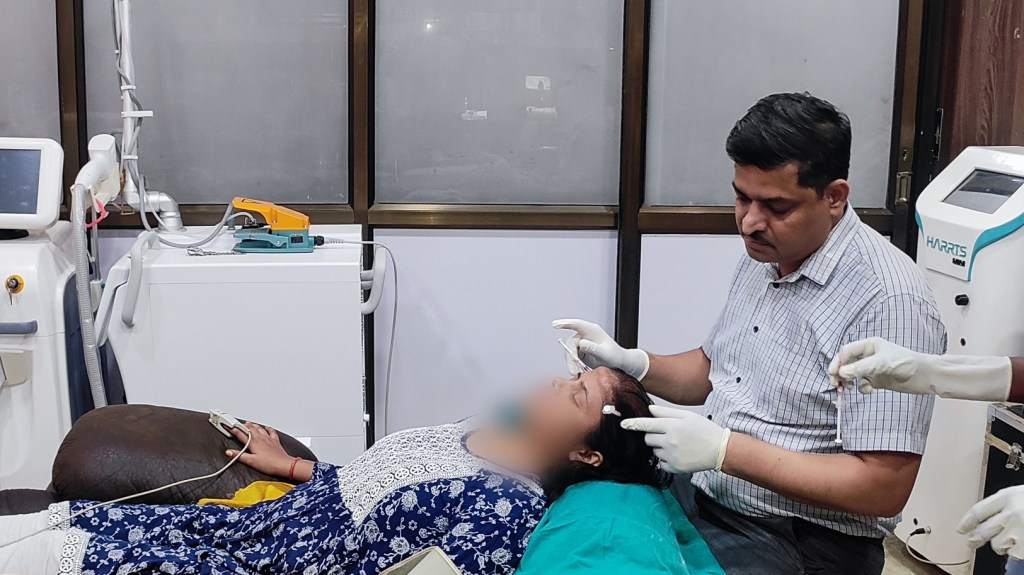
- FUE (Follicular Unit Extraction) Hair transplant– Fue hair transplant is the most popular surgical modality for treatment of androgenic alopecia in the current times. In this procedure, very fine punches ( hollow needles) are used to extract the hair follicles from the permanent zone ( back of the scalp with the most durable hair) and after collecting the desired number of follicle grafts, these are implanted in the bald areas of scalp through very tiny slit holes. The entire procedure is done under ‘Awake Scalp Anaestheia’ in which the entire area of head on which the procedure is being performed, is numbed by injecting anaesthesia and the patient is awake and comfortable through the procedure.
- https://www.facebook.com/share/r/19pDRjc11F/
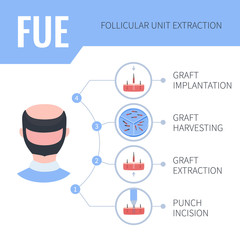
- Direct hair implantation ( DHI)– is another variant of FUE hair transplant in which the the follicles are transferred from donor site to recipient site directly ( without any storage time) and harvesting and implantation is carried out simultaneously. This procedure is supposed to reduce the ‘ body out time’ of the follicular graft and hence reduces drying and desiccation of grafts to improve the transplant outcome.
- FUT strip hair transplant with trichophytic donor site closure– This technique is used in case of either large recipient area with limited donor area ( usually grade 6-7 baldness) or when the client doesn’t want to cut the hair short as required for FUE hair transplant. In this technique a narrow strip of scalp skin from the safe donor area is taken out with a scalpel and the wound is closed by putting stitches. The hair follicles are separated out from the strip under magnification thus creating grafts ready to be implanted. Trichophytic closure is a special technique of suturing the strip harvest site which leaves almost negligible scar on the back of the scalp. Hair implantation procedure remains essentially the same as with FUE graft harvest.
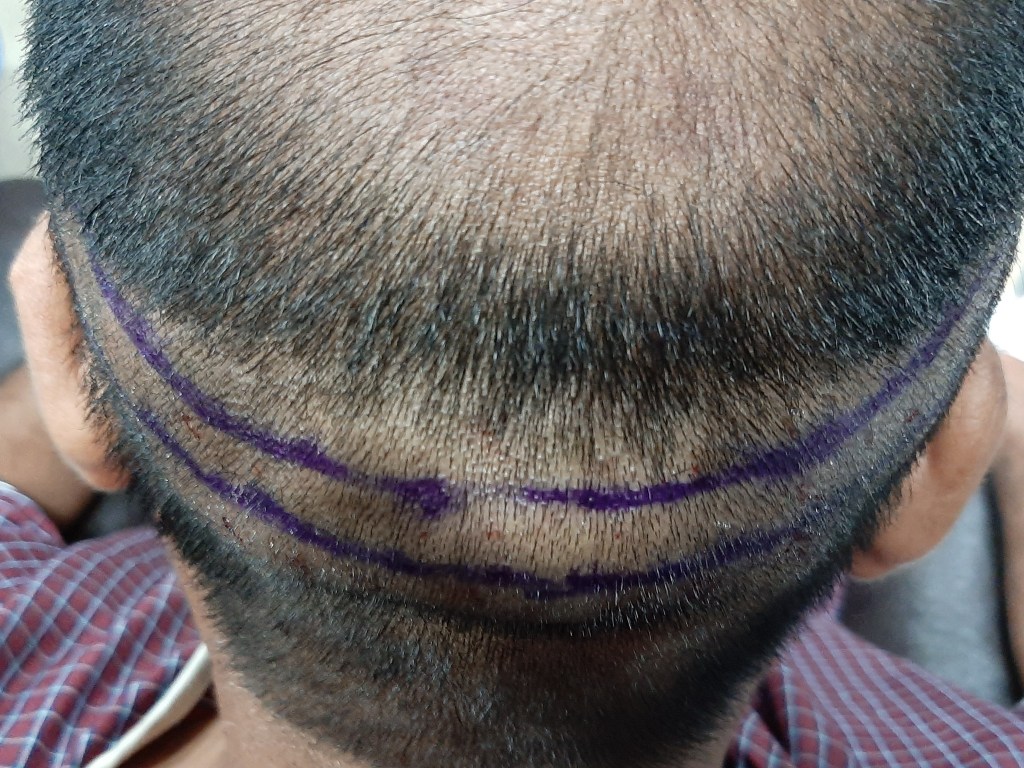

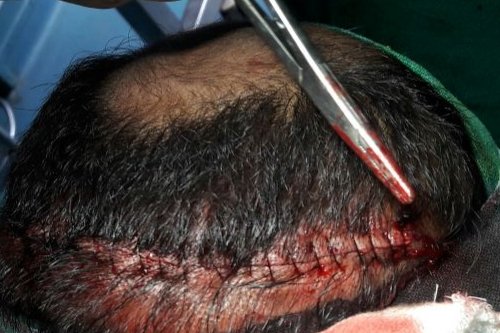
- FUE/FUT combination hair transplant is employed when more grafts are required and the client
- not want the body or beard harvest of grafts.
- Body Hair Transplant ( FUE) – Body hair are generally harvested in cases of higher grade of baldness i.e. grade 4-7 baldness with lack of suffitcient scalp donor area. Preferred body hair donor areas are beard, chest and abdomen in that order ; though rarely hair from other body parts may be harvested. Slow growth, thinner hair, single root per graft and comparatively inferior growth ( only 60-70% of body hair take up) are the important issues with body hair transplant. To address these, body hair are generally transplanted in combination with scalp or beard hair.
Alopecia Areata treatment
Alopecia areata is an autoimmune disorder that causes hair loss, typically in small, round patches on the scalp. It occurs when the immune system mistakenly attacks hair follicles. The exact cause is not well understood, and there is no cure, but various treatments aim to stimulate hair regrowth or manage symptoms.
Alopecia areata has various treatment options, including corticosteroids, topical minoxidil, and immunotherapy
 Dr Nema Hair, Laser & Cosmetic Surgery Clinic