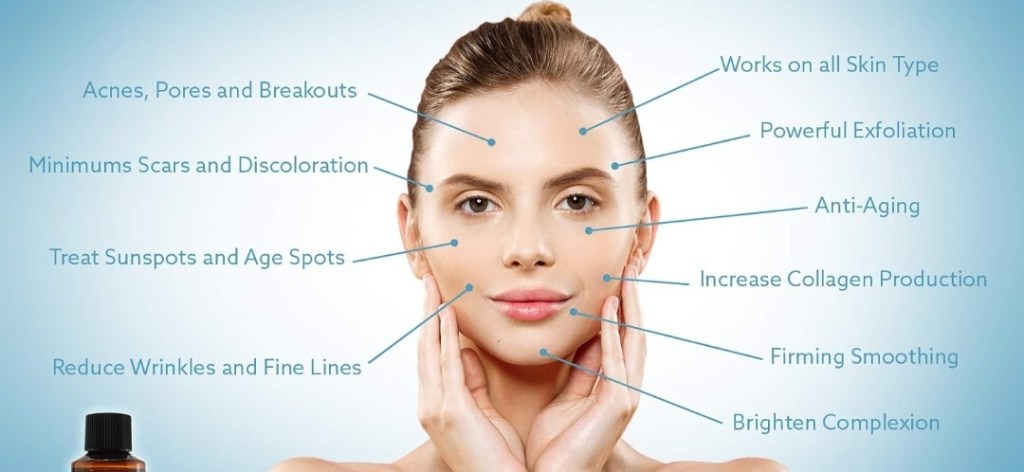
A glycolic acid peel is a type of chemical peel used for skin rejuvenation. It involves applying a glycolic acid solution to the skin to exfoliate its outermost layers. Glycolic acid is an alpha hydroxy acid (AHA) derived from sugar cane.
Here are some key points about glycolic acid peels:
- Purpose: Glycolic acid peels are commonly used to improve skin texture, reduce fine lines and wrinkles, treat acne and acne scars, and even out skin tone. They promote the shedding of dead skin cells and stimulate collagen production.
- Procedure: During the procedure, a dermatologist or trained professional applies a glycolic acid solution to the skin for a specific duration, depending on the desired depth of the peel. The solution is then neutralized and removed.
- Downtime: Superficial glycolic acid peels typically have minimal downtime, with some redness and mild peeling that can last a few days. Deeper peels may require more recovery time.
- Results: Improvement in skin texture and appearance is usually noticeable after a series of treatments. More significant results may be achieved with multiple sessions.
- Sun Protection: After a glycolic acid peel, it’s essential to use sun protection as the skin can be more sensitive to UV damage.
- Consultation: Consult with a plastic surgeon or skincare professional to determine if glycolic acid peels are suitable for your skin type and concerns. They can recommend the appropriate concentration and number of sessions.
It’s crucial to follow post-peel instructions carefully to maximize benefits and minimize potential side effects. Glycolic acid peels can be an effective option for improving skin quality and addressing various dermatological concerns.
 Dr Nema Hair, Laser & Cosmetic Surgery Clinic