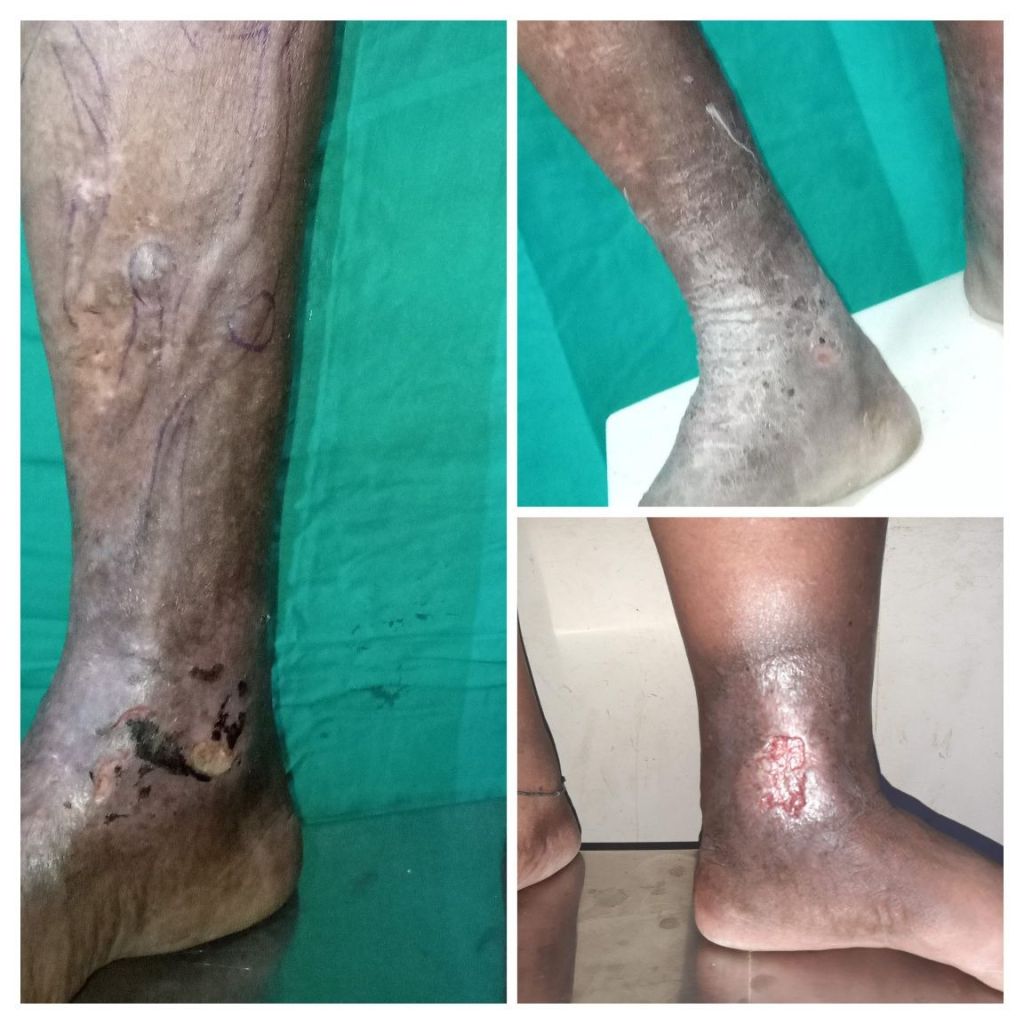
वैरिकोज़ नसों से खराब रक्त संचार और बढ़े हुए दबाव के कारण कई प्रकार की त्वचा संबंधी समस्याएँ हो सकती हैं। कुछ सामान्य समस्याएँ इस प्रकार हैं:
1. त्वचा का काला पड़ना (हाइपरपिगमेंटेशन) – प्रभावित नसों के आसपास की त्वचा भूरी या लाल हो सकती है, जो क्रॉनिक इंफ्लेमेशन और रक्त रिसाव के कारण होती है।
2. सूखी और खुजली वाली त्वचा (वेनस एक्जिमा या स्टेसिस डर्मेटाइटिस) – खराब रक्त संचार के कारण त्वचा सूखी, जलनयुक्त और लाल हो सकती है, जिससे खुजली होती है।
3. सूजन (एडेमा) – नसों में रक्त के जमाव के कारण पैरों में सूजन हो सकती है, जिससे त्वचा खिंची हुई और चमकदार दिखाई देती है।
4. त्वचा पर घाव (वेनस अल्सर) – गंभीर मामलों में, लंबे समय तक रक्त संचार में गड़बड़ी के कारण टखनों के आसपास धीमे भरने वाले घाव हो सकते हैं, जो संक्रमण का कारण बन सकते हैं।
5. लिपोडर्माटोस्क्लेरोसिस – यह एक स्थिति है जिसमें लंबे समय तक सूजन और ऊतक के कठोर होने के कारण त्वचा कड़ी, तंग और दर्दनाक हो जाती है।
6. रक्तस्राव और नीले धब्बे (ब्रूज़िंग) – त्वचा के पास की नाजुक नसें आसानी से फट सकती हैं, जिससे मामूली चोट से भी रक्तस्राव या नीले धब्बे हो सकते हैं।
7. सेलुलाइटिस – जहां त्वचा कमजोर होती है वहां बैक्टीरियल संक्रमण हो सकता है, जिससे लालिमा, सूजन, गर्माहट और दर्द हो सकता है।
यदि वैरिकोज़ नसों के आसपास किसी भी तरह का त्वचा परिवर्तन दिखाई दे, तो जटिलताओं से बचने के लिए डॉक्टर से सलाह लेना जरूरी है।
Varicose veins can lead to several skin problems due to poor circulation and increased pressure in the affected veins. Some common skin issues associated with varicose veins include:
- Skin Discoloration (Hyperpigmentation) – The skin around varicose veins may turn brown or reddish due to chronic inflammation and blood leakage from the veins.
- Dry, Itchy Skin (Venous Eczema or Stasis Dermatitis) – Poor circulation can cause the skin to become dry, irritated, and inflamed, leading to itching and redness.
- Swelling (Edema) – Fluid buildup in the legs due to venous insufficiency can cause swelling and discomfort, making the skin appear stretched and shiny.
- Skin Ulcers (Venous Ulcers) – In severe cases, prolonged venous insufficiency can lead to open wounds, typically around the ankles, which are slow to heal and prone to infection.
- Lipodermatosclerosis – A condition where the skin becomes hardened, tight, and painful due to long-term inflammation and fibrosis of the tissue.
- Bleeding and Bruising – The fragile veins close to the skin’s surface may rupture easily, causing spontaneous bruising or bleeding even with minor trauma.
- Cellulitis – Bacterial infections can occur in areas where the skin is compromised, leading to redness, warmth, swelling, and tenderness.
If you notice any significant skin changes around varicose veins, it’s important to seek medical attention to prevent complications.
 Dr Nema Hair, Laser & Cosmetic Surgery Clinic
Leave a comment