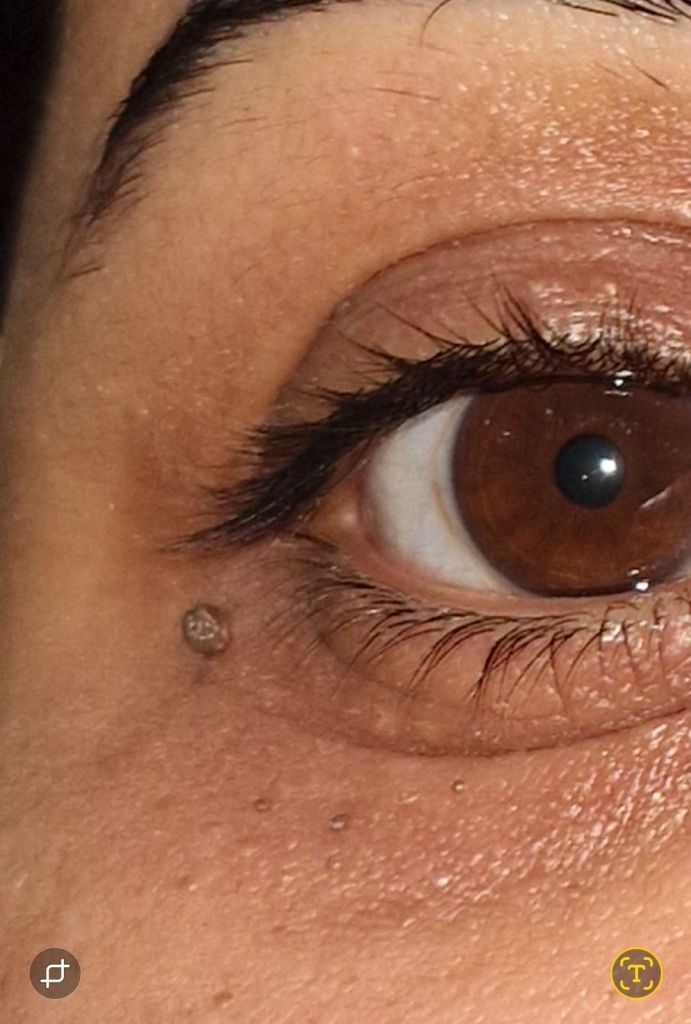
Periocular papillomas are benign epithelial growths that occur around the eyes. They are commonly caused by the following factors:
- Human Papillomavirus (HPV) – The most common cause, particularly low-risk strains like HPV 6 and 11, which induce benign growths on the eyelid or periocular region.
- Aging and Sun Exposure – In older adults, papillomas can develop as part of aging-related changes in the skin, often influenced by long-term ultraviolet (UV) exposure.
- Chronic Irritation or Inflammation – Repeated rubbing, exposure to irritants, or underlying inflammatory skin conditions can contribute to papilloma formation.
- Genetic Factors – Some individuals may have a genetic predisposition to developing papillomas more frequently than others.
- Weakened Immune System – People with immunosuppression (e.g., those with HIV, organ transplant recipients, or undergoing chemotherapy) are more susceptible to viral-induced papillomas.
Most periocular papillomas are harmless but can be removed if they cause discomfort, interfere with vision, or for cosmetic reasons. If you notice rapid growth, bleeding, or changes in color, it is best to consult an ophthalmologist or dermatologist to rule out malignancy.
पेरिओकुलर पैपिलोमा आंखों के आसपास होने वाली सौम्य (गैर-हानिकारक) एपिथेलियल वृद्धि हैं। इनके सामान्य कारण निम्नलिखित हैं:
- ह्यूमन पैपिलोमावायरस (HPV) – यह सबसे आम कारण है, विशेष रूप से लो-रिस्क प्रकार जैसे HPV 6 और 11, जो पलक या आंखों के आसपास सौम्य वृद्धि उत्पन्न कर सकते हैं।
- बुढ़ापा और सूर्य का संपर्क – वृद्ध व्यक्तियों में, त्वचा में उम्र से संबंधित बदलावों के कारण पैपिलोमा विकसित हो सकते हैं, जो अक्सर लंबे समय तक पराबैंगनी (UV) किरणों के संपर्क में आने से प्रभावित होते हैं।
- क्रोनिक जलन या सूजन – बार-बार आंखों को रगड़ने, प्रदूषकों के संपर्क में आने या किसी अंतर्निहित सूजन संबंधी त्वचा रोग के कारण भी पैपिलोमा हो सकता है।
- अनुवांशिक कारक – कुछ व्यक्तियों में आनुवंशिक प्रवृत्ति के कारण पैपिलोमा विकसित होने की संभावना अधिक होती है।
- कमजोर प्रतिरक्षा प्रणाली – HIV, अंग प्रत्यारोपण, या कीमोथेरेपी जैसी स्थितियों के कारण प्रतिरक्षा प्रणाली कमजोर होने पर, वायरस से प्रेरित पैपिलोमा होने की संभावना बढ़ जाती है।
अधिकांश पेरिओकुलर पैपिलोमा हानिरहित होते हैं, लेकिन यदि वे असुविधा पैदा करें, दृष्टि में बाधा डालें, या सौंदर्य संबंधी चिंताओं के कारण हटाना आवश्यक हो, तो इन्हें हटाया जा सकता है। यदि पैपिलोमा तेजी से बढ़ता है, खून निकलता है, या रंग बदलता है, तो किसी नेत्र रोग विशेषज्ञ (ऑप्थलमोलॉजिस्ट) या त्वचा विशेषज्ञ (डर्मेटोलॉजिस्ट) से परामर्श करना महत्वपूर्ण है, ताकि किसी गंभीर बीमारी की संभावना को दूर किया जा सके।
https://maps.app.goo.gl/ugxfb63VtyR39WoG6
 Dr Nema Hair, Laser & Cosmetic Surgery Clinic
Leave a comment